
Tips for picking out this year’s Christmas tree
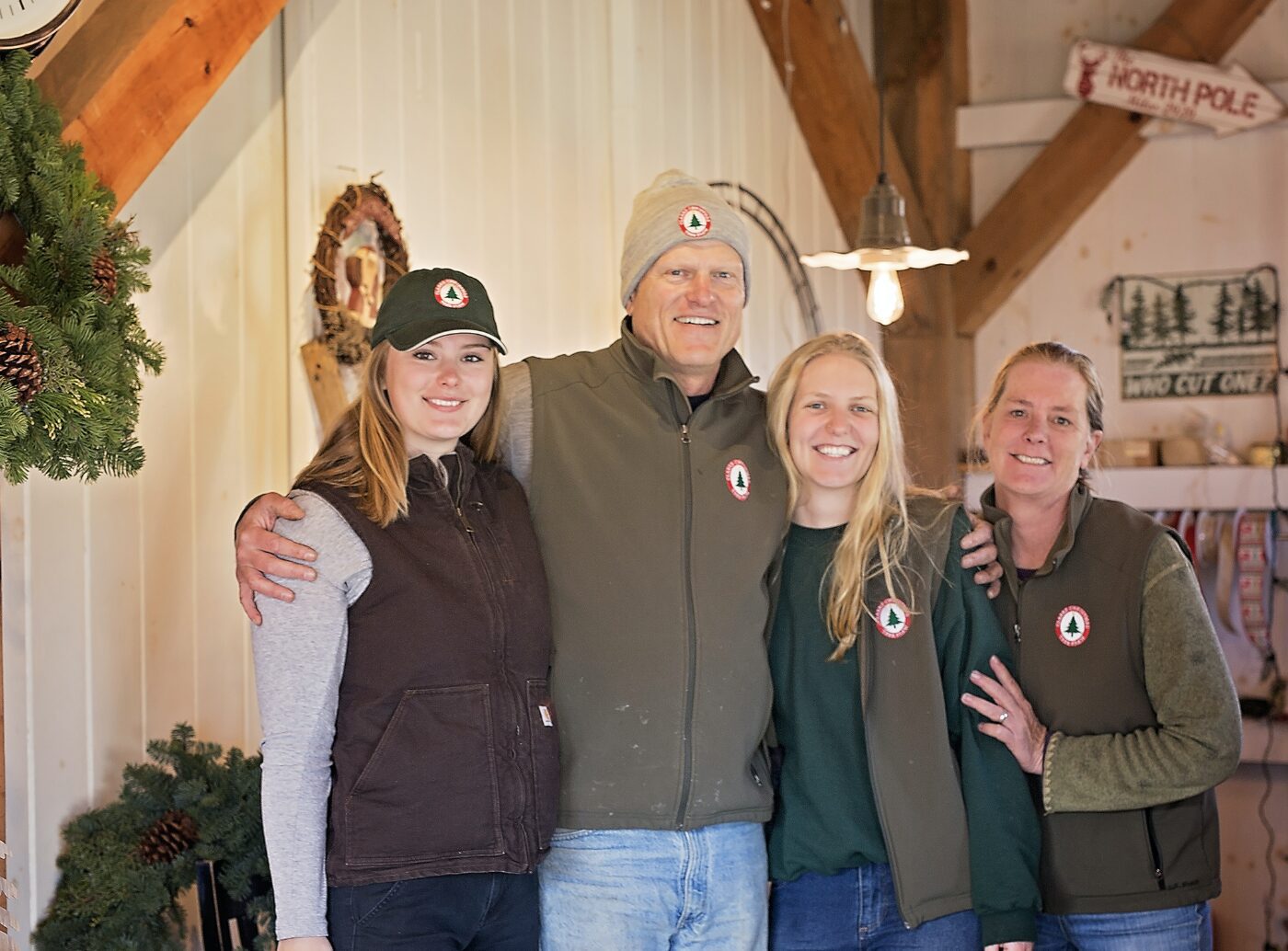
(Photo, top: At Bedrock Tree Farm in Wakefield, Andrew McKinney ’16 helps a newly-bought tree prepare for its trip home)
’Tis the season — to pick out a Christmas tree.
A forestry extension specialist at the University of Rhode Island, Christopher Riely talks trees all year as a certified forester and arborist. As the holidays approach, he also likes to “go local” when purchasing a Christmas tree. Riely advises buying local, both for savings and selection.
“It can be a fun expedition to pick out a locally grown tree,” Riely said.
There are also environmental positives to sprucing up your home with a live tree: live trees are made of 100% renewable materials, no special recycling or composting needed, and absorb carbon from the atmosphere during their lifetime.
Buying a local live tree is not only environmentally friendly, it’s also good for local businesses.
Eric Watne MBA ’96 is putting his URI financial training to work overseeing Clarks Christmas Tree Farm in Tiverton, the oldest Christmas tree farm in Rhode Island. As president of the Rhode Island Christmas Tree Growers Association, he notes the pressure on tree farmers, reporting that the association’s membership has dropped from more than 50 farms at one time to less than a dozen, due to increasing development pressures or lack of interest in succession ownership. He says his family feels a social responsibility to maintain the farm and appreciates the role the farm has played in the lives of many Rhode Islanders, as generations return with their own children.
You can find URI connections at other local tree farms as well, including Big John Leyden’s Tree Farm in West Greenwich, the largest Christmas tree farm in southern New England, started by John Leyden ’56, or Bedrock Tree Farm in Wakefield, where Nick Zartarian ’14, Sean Cullen ’14 and Andrew McKinney ’16 pitch in to help their former baseball coach each year.
An architectural designer today, Zartarian says that returning to the farm annually to help his former coach is a way to build community over the years, with other former teammates. “One of my favorite parts is seeing familiar faces return each Christmas,” he said, “along with meeting new customers who enjoy the farm and its atmosphere enough to make it part of their own holiday tradition.”
Tree tips
Riely says that some family-run farms allow customers to visit before the season to select and “tag” a tree, then return to have it cut before the holidays. Shoppers can look for the particular species, size and shape of tree they prefer. For those looking for a bargain, there are also opportunities to take home a less-than-perfect “character tree” that can be visually interesting and fun to decorate and display in creative ways.
Some people enjoy decorating live trees outside their homes, too. “I have seen bonsai hung with miniature ornaments for the holidays,” Riely said. “In desert climates, some large cacti are even decorated for the season!”
Riely likes to vary the type of tree he puts up year to year and, last year, brought home a Korean fir, purchased from a mom-and-pop farm outside of Providence.
Whether shopping in the woods or on a lot, Riely suggests shoppers touch a tree’s needles to assess its health before buying. Fresher trees will have needles that are pliable rather than brittle or stiff. If a tree drops a lot of needles when you touch its branches or lift and tap the base on the ground, look for another, fresher tree. The bottom of a fresh tree is typically moist and sticky with sap, while older trees may have a grayish or dried-out base.
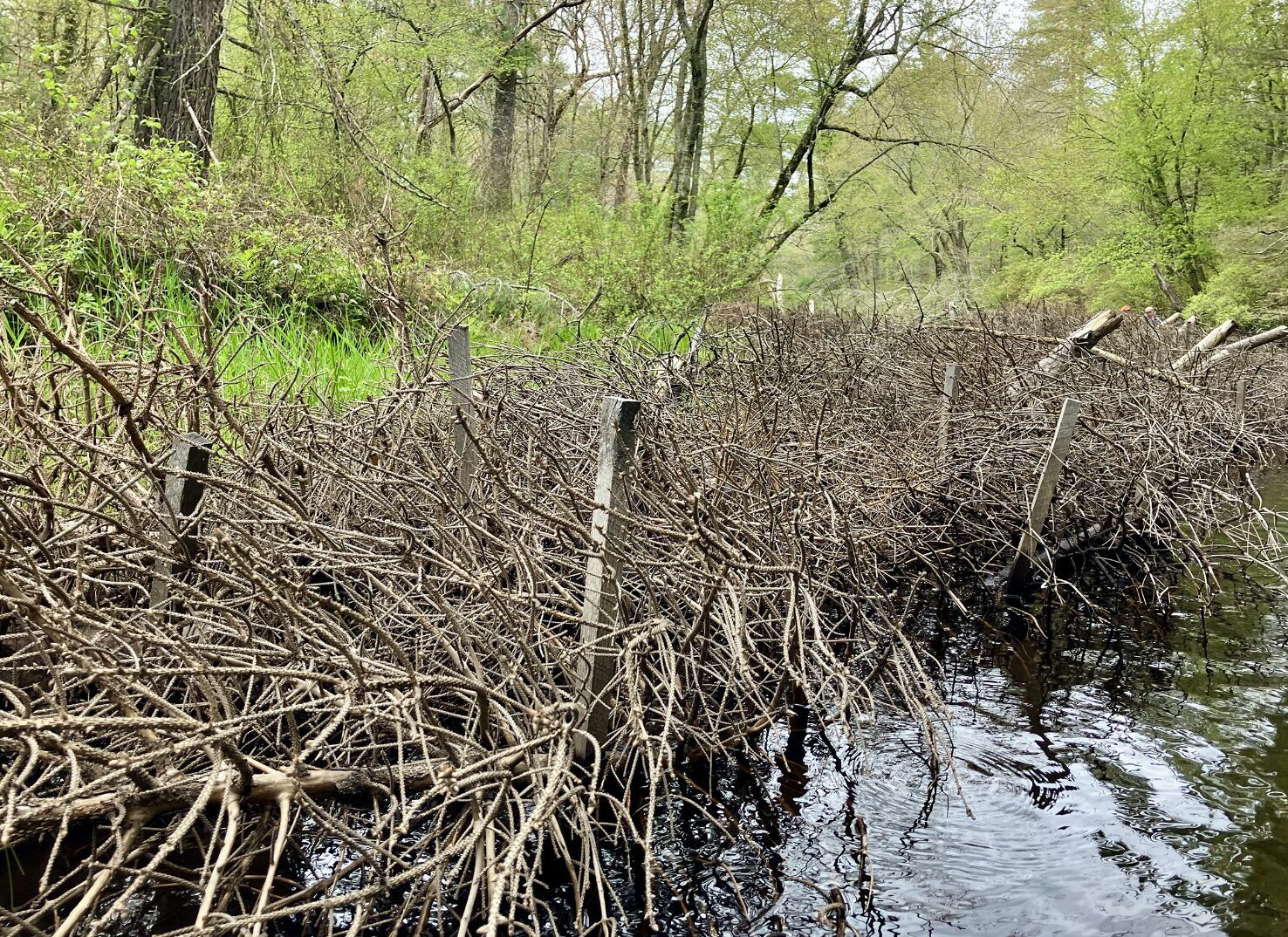
And trees offer benefits after the holidays as well. Depending on the area, trees may even be used in stream restoration projects to improve habitat for fish and aquatic life.
Riely’s colleague in URI Cooperative Extension, Sejal Lanterman, says her family repurposes their tree as backyard habitat for birds (and some lucky squirrels) each year: “It’s a lovely way to extend the spirit of the season and give a little something back to nature.”
To learn more about Rhode Island trees of all varieties, visit Rhode Island Woods, an online resource for information on Rhode Island forests, maintained at URI.
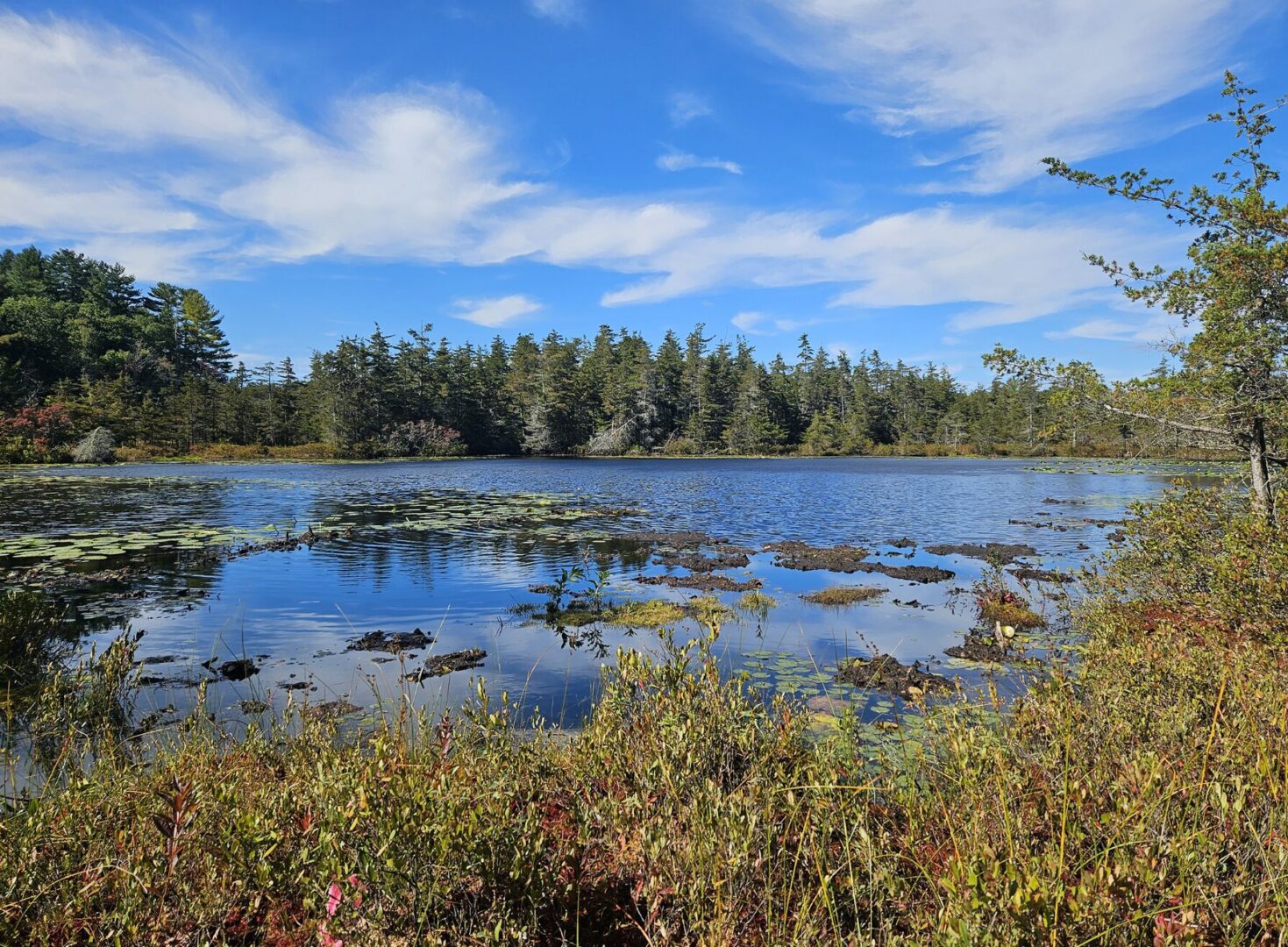
URI Photo / Michelle Peach
URI environmental / science faculty offer suggestions for an active and interesting new year
As debate continues on screen time for users of all ages, faculty in the University of Rhode Island’s College of the Environment and Life Sciences offer shopping suggestions for family activities and pastimes that get children—and family members—off devices and out of the house.
This kind of mindful gift planning can help increase science literacy and encourage future scientists while also offering connections and benefits for adults looking to minimize their own screen time in the year ahead, they say.
“Fostering children’s interest in growing food or flowers is a great way to encourage curiosity and wonder, without looking at a device,” said Lisa Townson, the college’s associate dean of extension and agricultural programs. “Watching for seeds to sprout can be very exciting! Even in the winter, mini greenhouses can be set up inside, or milk cartons can be turned into terrariums to grow plants on a windowsill.”
Michael Rice, professor of aquaculture/fisheries, says a digital microscope or mineral science kit is a great idea for a holiday gift, or perhaps a telescope, science lab or plant press. A subscription to National Geographic might be another good family gift.
Laura Meyerson, professor of natural resources science, suggests a pair of binoculars and bird field guide or journal to record birds spotted in the backyard or anywhere. The recipient could even start a bird life list on Merlin or eBird and build their list over time.
Other gift ideas that encourage interest in science include bird feeders, bug boxes, rock collection display cases, and nets for catching frogs or insects.
Faculty members also suggest ways for Rhode Island families to be more active or plan adventures in the year ahead that don’t require shopping.
Families can join local citizen-science projects such as Watershed Watch at URI or the American Chestnut Foundation, while outdoor experiences or annual passes for sites like Save the Bay Aquarium, Biomes Marine Biology Center, Museum of Science Boston, New Bedford Whaling Museum, Norman Bird Sanctuary, or Mystic Aquarium also make a great idea for family gifts. (You might even run into a URI alum working there.)
“Families can also help contribute to crowdsourced data that scientists rely on,” said Meyerson. She suggests Globe Observer, which helps NASA by recording clouds, trees, or mosquito habitats to support NASA Earth observation missions; Zooniverse, which helps scientists classify galaxies, identify wildlife, and transcribe field notes; and CoCoRaHS, which measures local rainfall or snow for the Community Collaborative Rain, Hail and Snow Network.
Home adventures
You can also explore nature from your own home. Sarah Kienle, an assistant professor of wildlife biology and mother of two, recommends getting the books “Amara and the Bats” or “Marjory Saves the Everglades” from your local library or playing a game of Hay Stax or Concept Kids: Animals. Her colleagues Michelle Peach and Graham Forrester, in the Department of Natural Resources Science, also recommend Wingspan as a good choice for bird enthusiasts of all ages, or Finspan if you love fish.
Christopher Riely, URI forestry specialist, has—not surprisingly—an affinity for one of the best fruits of trees: books. Riely suggests “My Side of the Mountain,” the classic adventure tale by Jean George, about the call of the outdoors. He also likes the vintage Golden Guides, the introductory field guide series that has inspired millions to get out and explore for more than half a century.
“They are still great for kids,” he said. “The cover art in out-of-print classic editions is still my favorite and can be found on Etsy, Biblio, eBay, etc.”
That said, if you do scroll, make sure to include URI’s College of the Environment and Life Sciences in your feed. Follow @uri_cels on social media for videos, tips and information on public-interest projects like wild turkeys, rebounding bobcats and more, all year long.
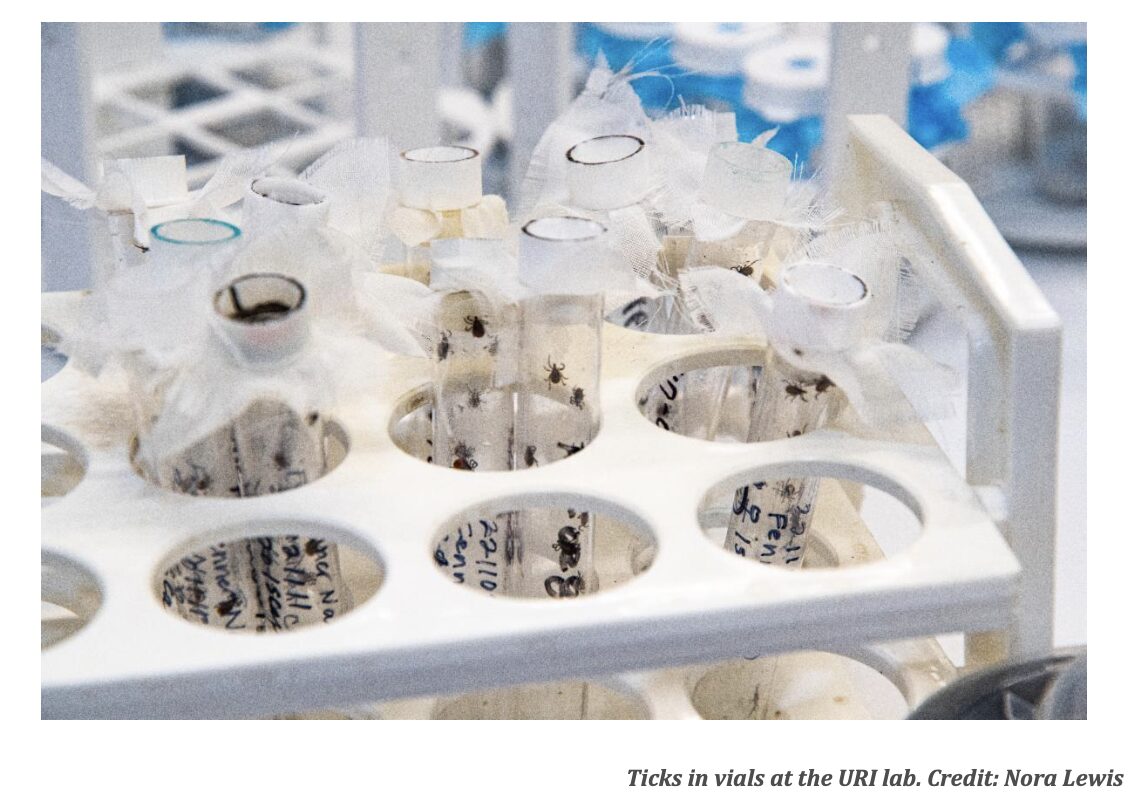 The Rhode Island Department of Environmental Management (DEM) and the University of Rhode Island (URI) are collaborating on two new state-led tick research projects to better understand tick-borne disease risk. One project is in partnership with the Town of New Shoreham focusing on Block Island, and the other is statewide. Both research projects involve collecting tick samples along popular hiking trails where people and ticks are most likely to come into contact.
The pilot project underway on Block Island is identifying which types of ticks are found on the island and testing them for pathogens that can cause tick-borne diseases. Live ticks are collected and processed at URI before being tested. The findings will guide future efforts to control tick populations and reduce tick bites through educating the public about prevention, with the goal of lowering tick-borne illness on the island. The research is expected to continue through September 2027.
A separate statewide project has an expanded focus which aims to strengthen tick bite prevention and inform future statewide tick controls plans. The project focuses on sampling ticks on popular public trails and in heavily used recreational areas across the state. Funded through a $250K Rural Health Transformation Program grant in collaboration with the RI Executive Office of Health and Human Services (EOHHS), the research will support outreach and education efforts with URI’s Tick Encounter and Cooperative Extension. The project is expected to continue through July 2027.
“The population growth of different tick species is a definite concern,” said DEM Director Terry Gray. “DEM is responding to the issue by working with town officials from New Shoreham and collaborating closely with URI to develop these projects. This tick surveillance is a critical first step in gathering data that will guide future efforts to keep Rhode Islanders safer from tick-borne disease. Educating people where and when they’re most likely to encounter ticks and how to avoid them is a big part of prevention, and DEM is grateful for the support of our partners on these first state-led tick surveillance projects.”
“We know that tick-borne disease is a growing health concern, in particular for people living and visiting rural Rhode Island,” said EOHHS Assistant Secretary Ana Novais. “EOHHS has heard the call for action from residents and health providers to invest in activities to mitigate the impact of ticks in our rural communities. The Rural Health Transformation Program funding allows us to provide much-needed resources to expand information and outreach on the major health implications of tick bites.”
“Gathering comprehensive baseline data on ticks on Block Island and throughout Rhode Island is a critical first step,” said Dr. Jannelle Couret, Associate Professor of Biological Sciences at URI, who is leading the projects. “Learning what type of ticks and when and where they are most abundant will help inform the most effective efforts to prevent tick bites.”
“Dr. Couret’s work builds on decades of tick surveillance research at URI to better understand tick-borne disease risk across the state,” said Jean VanderGheynst, Dean of URI’s College of the Environment and Life Sciences. “Our students gain hands-on experience in public health research, and URI Cooperative Extension will use the findings to help Rhode Islanders prevent tick bites. Bringing research, student learning and outreach together to meet a public health need is central to URI’s land-grant mission.”
“Last year, the New Shoreham Town Council declared tick-borne disease a public health crisis on Block Island, and our residents and visitors live with its effects every day, from Lyme disease to the alarming rise in alpha-gal syndrome,” said New Shoreham Town ManagerAmy Lewis Land. “Partnering with DEM and URI to establish solid data on the ticks and pathogens on our island supports the Town’s goal of slowing and eliminating the spread of tick-borne disease in order to protect public health. It will also support the Town’s broader efforts with our state partners, including reducing the island’s deer population, the primary host for the ticks that are making our community sick.”
Rhode Island has three major tick species of concern: blacklegged (deer), lone-star, and dog ticks, each capable of transmitting different pathogens. The invasive lone-star tick has rapidly expanded across the state, raising concerns about alpha-gal syndrome, a potentially life-threatening red meat allergy. The invasive Asian longhorn tick, first found in RI in 2020, is also becoming more common but is not currently considered human health risk.
The statewide project is supported by the Centers for Medicare & Medicaid Services (CMS) of the US Department of Health and Human Services (HHS) as part of a financial assistance award totaling $314,341,898.54 for Budget Periods 1 & 2, with 100 percent funded by CMS/HHS. The contents are those of the author(s) and do not necessarily represent the official views of, nor an endorsement, by CMS/HHS or the U.S. government.
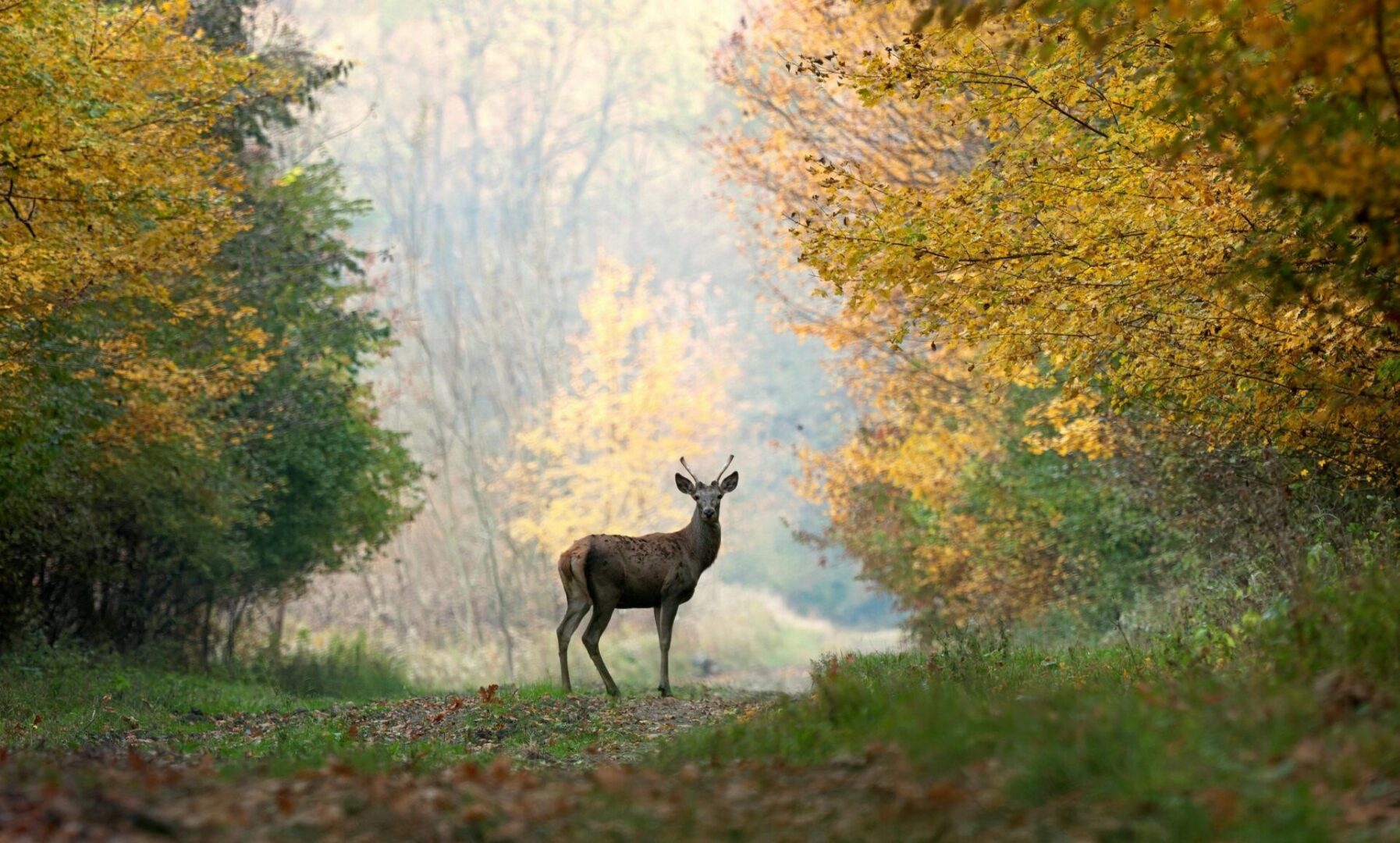
– from The Nantucket Current
The number of deer donated to the Nantucket Land Bank to be shared with local families this year has already doubled last year’s total. And there are still almost three months left in the local deer hunting season.
“I think we are seeing a lot of success,” Emily Goldstein Murphy, the Land Bank’s director of environmental and agricultural resources, told the Current. “The hunters seem to be delighted to have this opportunity to donate and give back to the community.”
Last year, in its first year of operation, the Land Bank’s agricultural processing facility on Boynton Lane accepted 59 deer during hunting season as part of Hunters Share the Harvest, a state program that allows hunters to take unlimited deer if they donate them to area residents experiencing food insecurity. This year, the Land Bank has already received 124 deer as of Thursday, Nov. 19.
The program is going well, Goldstein Murphy said, and the Land Bank is stretching its operational capabilities to keep up with the donations.
“We’re doing the best we can,” she said. “Everyone is working really hard to maintain the strict standards that we take very seriously, and we’re achieving those goals.”
One new wrinkle this year that may be driving increased donations is the Nantucket Conservation Foundation’s incentive program. The Conservation Foundation announced earlier this year that it will pay hunters $150 for each deer they donate to the Land Bank. And the incentive seems to be a hit.
In the first month of the program, 29 hunters claimed the incentive, donating a total of 71 deer.
“That matters for the health of our forests, for the safety of our residents, and for reducing ticks on the island,” Danielle O’Dell, the foundation’s director of research, said in a statement. “Every one of those deer also provided food for a neighbor.”
The Conservation Foundation has committed $30,000 toward the program, which has drawn positive reviews from Nantucket’s food security workers.
“The Nantucket Conservation Foundation’s initiative to incentivize deer hunters is amazing,” Nantucket Food Pantry manager Ruth Pitts said in a statement. “We have already received over 300 pounds of ground venison, providing an excellent additional source of protein for our customers at the Nantucket Food Pantry.”
Goldstein Murphy agreed that the incentives have led some hunters to donate venison who otherwise may not have.
“I do think that it has been a driver,” she said.
Goldstein Murphy also stressed her gratitude to the island’s hunters, who are ultimately responsible for all of the venison donated to the Land Bank.
Beyond the aid provided to Nantucket’s food-insecure population, incentivizing deer hunting has broader public health benefits.
The massive herd of deer on Nantucket – which the state biologist pegs at a population as high as 10,000 – is a public health threat. Deer are notorious vectors of Lyme disease and other tick-borne illnesses and pose a serious risk to drivers and motorists. Additionally, they contribute to the decline of Nantucket’s native vegetation by devouring the understory across the island, which has major consequences for island ecosystems and can increase rates of erosion. The deer population is, broadly speaking, also unhealthy: many of the deer are emaciated and starving, forcing them to eat plants they would normally avoid and even consume trash.
The post Outdoors in RI: Christmas Trees with Impact, URI’s Outdoor Gift Ideas, Tick Research and Nantucket Deer appeared first on RINewsToday.


